Why Bees Matter.
The importance of honeybees to the ecosystem, food supply, and the planet
A pillar of the ecosystem. The third bite of every meal. The quiet workers holding the planet together.
Bees are a pillar of the ecosystem and critical for life to exist on the planet.
Without bees, the world we know — the orchards, the wildflowers, the gardens, the fields that feed us — would not exist. They are not optional. They are foundational.
What the bees quietly do.
The work of a honeybee is small and slow, and the sum of it is the world we eat from.
80%
of all flowering plants are pollinated by honeybees.
130+
types of fruits and vegetables depend on them.
40%
of all wild flowers and native plants are bee-pollinated.
1 in 3
bites of food you eat begins with a bee.
And yet the bees are disappearing.
Beekeepers across the globe are reporting an annual loss of nearly half their hives. The reasons are not mysterious: toxic pesticides, the loss of grasslands and wildflowers to monoculture farming, the steady erasure of habitat by urban sprawl, and a climate that grows less recognizable each season.
The bees are telling us something. They have been for years. Whether we listen is the work of our time.
Two healthy hives can pollinate an entire five- to ten-acre garden.
Hosting a hive is among the most direct, most concrete things a person can do for the bees and for the land. One garden, one rooftop, one hive at a time — the world begins to mend.
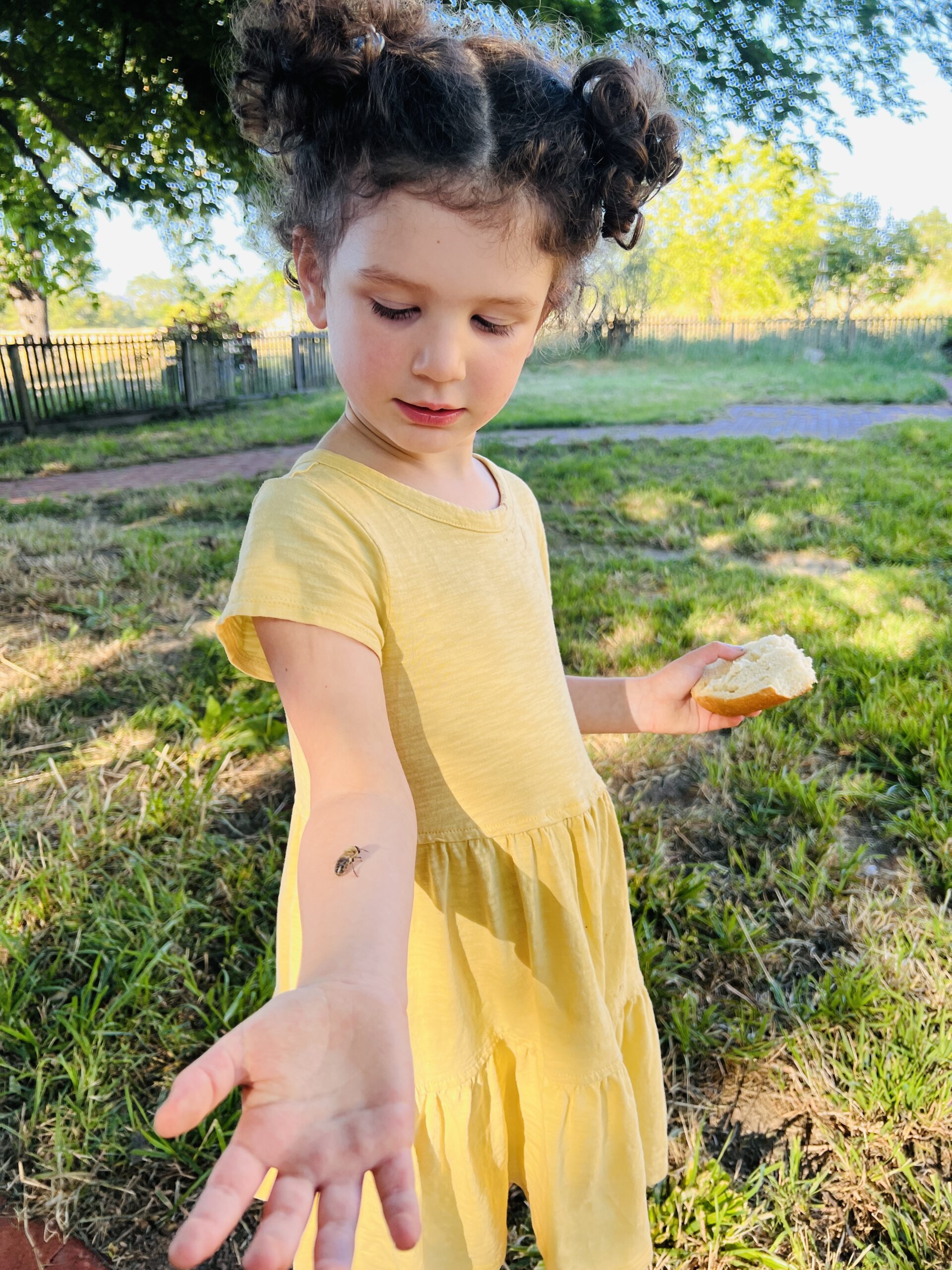
The Next Generation
“Protecting bees is an ecological duty, pushing them to extinction is an ecological crime. The threat to bees is a threat to humanity.”
— Dr. Vandana Shiva
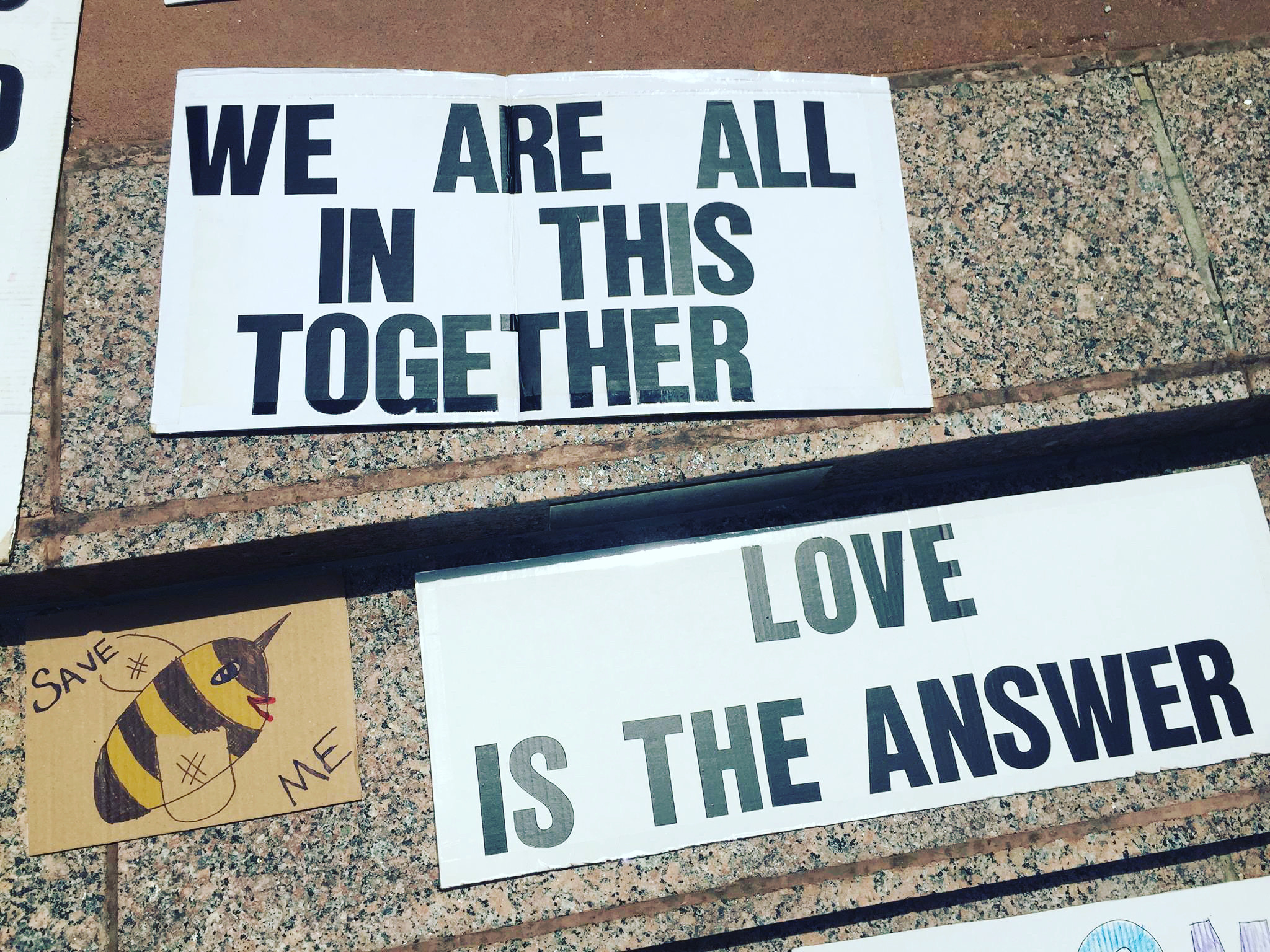
Signs from the March Against Monsanto, Orlando, Florida, 2015
I took this photograph at the March Against Monsanto in Orlando, Florida, in 2015. I was collaborating with an organic community farm at the time — creating its farmers’ market and tending a children’s program I’d co-created with the farm’s founder, where families came to meet the animals and learn the sanctity of food.
Bees hadn’t yet become the center of my work, but the work was the same. For the land. For the food. For the systems that hold the planet together.
We Are All In This Together.
Love Is The Answer.
Three ways to come close.
i.
Host a Hive
A hive in your garden or on your rooftop. We install, we tend, you watch the seasons turn. The most direct way to help.
Host a Hive →
ii.
Become a Beekeeper
A year-long apprenticeship, hand to hand and hive to hive. The oldest way of learning the craft, alongside an experienced beekeeper.
Begin the Apprenticeship →
iii.
Sponsor a Hive
For those who can’t host one themselves — sponsor a hive elsewhere in the Bay Area, and help us bring more bees into the landscape.
The bees have always done the quiet work.
Now is our turn.